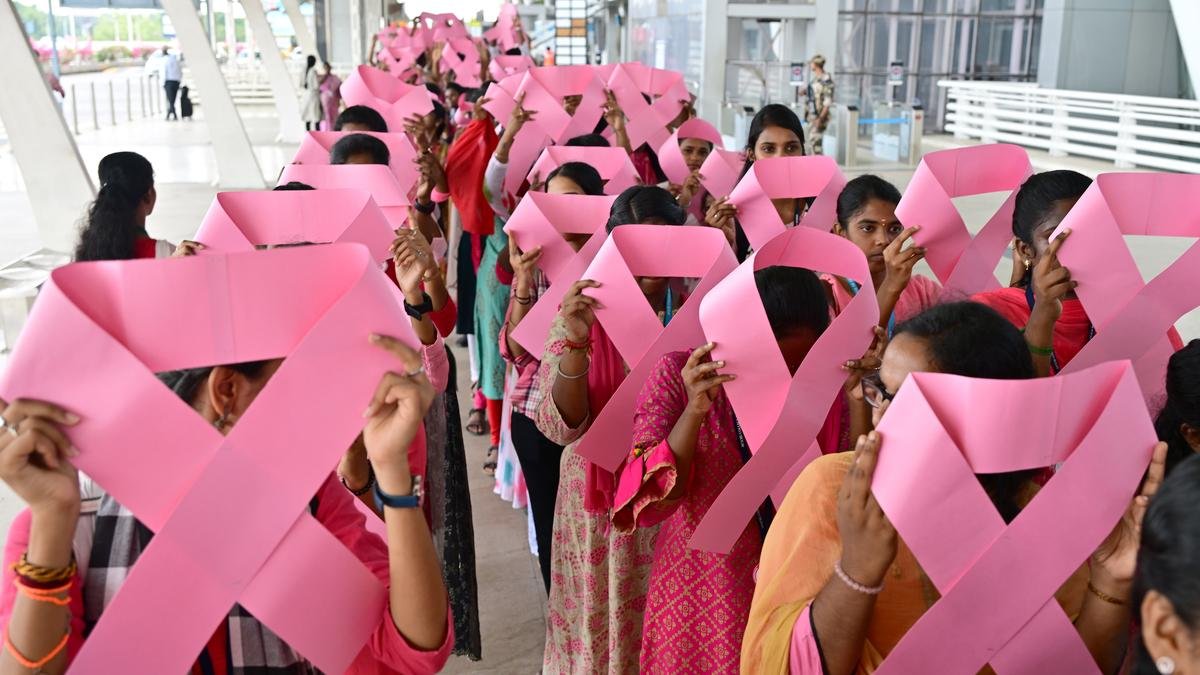
No two breast cancer patients are the same. Likewise, treatments and response to treatments vary depending on multiple factors. Significant advances in breast cancer treatments over the years have improved diagnosis, treatment and outcomes. Some of these advances have made breast conservation as well as precision and tailor-made interventions possible for many patients, say oncologists.
Breast cancer is the most common cancer among women in India, accounting for nearly 30% of all cancers among women, says Arvind Krishnamurthy, professor and head, surgical oncology, Cancer Institute (WIA), Chennai. said. “Advances in breast cancer management over the years have significantly improved diagnosis, treatment, and outcomes, driven by technological innovations, increased awareness, and multidisciplinary care,” he says.
Advancements in diagnosis and treatment
Over the past decade, there has been a significant advancement in the ability to detect and treat breast cancer in terms of both expertise and technology, says Sapna Nangia, director, head, neck and breast, senior consultant – radiation oncology, Apollo Proton Cancer Centre (APCC), Chennai. “This has led to better chances of cure, of living longer and of living with fewer consequences of the cancer and its treatment. In short, the advances in breast cancer have improved both survival and survivorship. These developments have happened across the entire gamut of breast cancer diagnosis and treatment; the latter involves surgery, radiotherapy and systemic treatments such as hormone therapy, chemotherapy, targeted therapy and in certain situations, even immunotherapy,” she said.
In fact, better screening tools, such as digital mammograms and tomosynthesis allow breast cancers to be detected when they are too small to be felt by the patient or doctors. Techniques such as J-needle localisation then guide the surgeon to the exact location of the tumour for safe removal of the tumour, she says.
Oncology is one of those rapidly evolving sciences with newer molecules revolutionising cancer treatment, notes Veda Padma Priya, clinical lead and senior consultant, breast oncology, MGM Cancer Institute. “Surgery, chemotherapy and radiation remain the three main pillars of cancer treatment. Now, it is the era of personalised medicine and no two breast cancers are treated the same way. Molecular profiling identifies subtypes of breast cancer based upon which the treatment is tailored. For instance, hormonal therapy plays a crucial role in luminal cancers, while immunotherapy forms the forefront of triple negative breast cancer treatment,” she said.
Breast conservation
Elaborating on advances in breast cancer surgery, Dr. Krishnamurthy noted that historically, mastectomy (total removal of the breast) was considered to be the standard of care for all stages of breast cancers. “Multiple sources of randomised evidence over four decades have clearly shown the safety of breast conservation in early stages of breast cancers (Stages I and II) and even in selected cases of locally advanced breast cancers. Breast conservation surgeries now have to be performed with the use of one/combination of myriad oncoplastic reconstruction techniques in an attempt to enhance cosmetic outcomes without compromising oncological outcomes. The use of minimally invasive surgical techniques – laparoscopic/robotic – with immediate reconstruction are also gaining popularity,” he explains.
Dr. Priya adds that with increasing rates of breast conservation, mastectomy is no longer the standard of care in early breast cancer. “We are able to achieve a 65% conservation rate at our centre. Oncoplastic surgery and neoadjuvant therapy have facilitated breast conservation in women who would have otherwise had complete removal of the breast. Reconstructing the breast with implants or free flaps have boosted body image after complete removal,” she said.
Decades-long experience now confirms that breast conservation surgery is the ideal treatment for early-stage breast cancer; however, the addition of chemotherapy and other systemic agents allows breast conservation even in larger tumours, Dr. Nangia points out. “At APCC, surgical advances such as oncoplasty help ensure that the surgically treated breast has the same shape, size and weight as the opposite breast, greatly impacting both the physical and emotional health of the patient,” she adds.
Lymph node treatment
Besides the breast, doctors also have to treat lymph nodes in the underarm of patients. “This can result in shoulder problems and swelling of the affected arm and forearm. Newer techniques such as sentinel lymph nodes biopsy, using radiation instead of surgery can reduce these issues. When axillary surgery is required, a new technique called LYMPHA can help reduce the chances of swelling of the arm,” says Dr. Nangia.
“Surgery for the lymph nodes in the ipsilateral axilla alongside the removal of the breast tumour is considered to be an integral part of surgery for breast cancers. Growing evidence has led to treatment de-escalation in the management of the lymph nodes in the axilla as well, that is from removal of all lymph nodal stations to selective removal (sentinel lymph node biopsy/targeted axillary dissection) in appropriate cases,” Dr. Krishnamurthy adds.
Radiotherapy advances
In radiotherapy, advances include precision radiotherapy using intensity-modulated radiotherapy, image-guided radiotherapy and proton therapy among others in an attempt to reduce cardiac and lung doses post-breast conservation/ mastectomy, he adds.
Looking to preserve the long-term health of patients undergoing breast cancer treatment, attention has to be given to reducing the risk of radiation-induced heart disease, Dr. Nangia observes. “The risk of radiation impacting the heart is higher in patients who already have diabetes, hypertension and obesity. This is especially the case when patients have left-sided breast cancer or the disease is in the advanced stages requiring nodal irradiation or chemotherapy that impacts the heart. The risk of developing heart disease is significantly reduced by using proton therapy, a specialised radiation technique. This technique has been in use at the APCC for the last six years and has the additional advantage of reducing the risk, albeit small, of radiation-induced second cancers in young breast cancer patients such as women in their 20s and 30s,” she explains.
Precision medicine
“At least 10% of breast cancers are hereditary and about a dozen genes are identified to be associated with breast cancer. Genetic testing detects mutations that increase the risk of breast cancer according to which the treatments are customised,” Dr. Priya notes.
A very significant evolution in the treatment of breast cancer is the development of personalised systemic therapy. “Patients are treated with medicines that are specific to their breast cancer subtype. The spectrum of medicines includes hormone therapy, tailored chemotherapy, specific drugs that target genes within the cancer cell or harness the immune system to improve the result of treatment. Certain molecular studies help identify patients in whom the disease has low risk of recurring or spreading. This then helps these patients avoid chemotherapy. Young women in the child-bearing age can now opt to preserve their child-bearing ability before starting chemotherapy,” Dr. Nangia says.
Published – August 08, 2025 02:25 pm IST