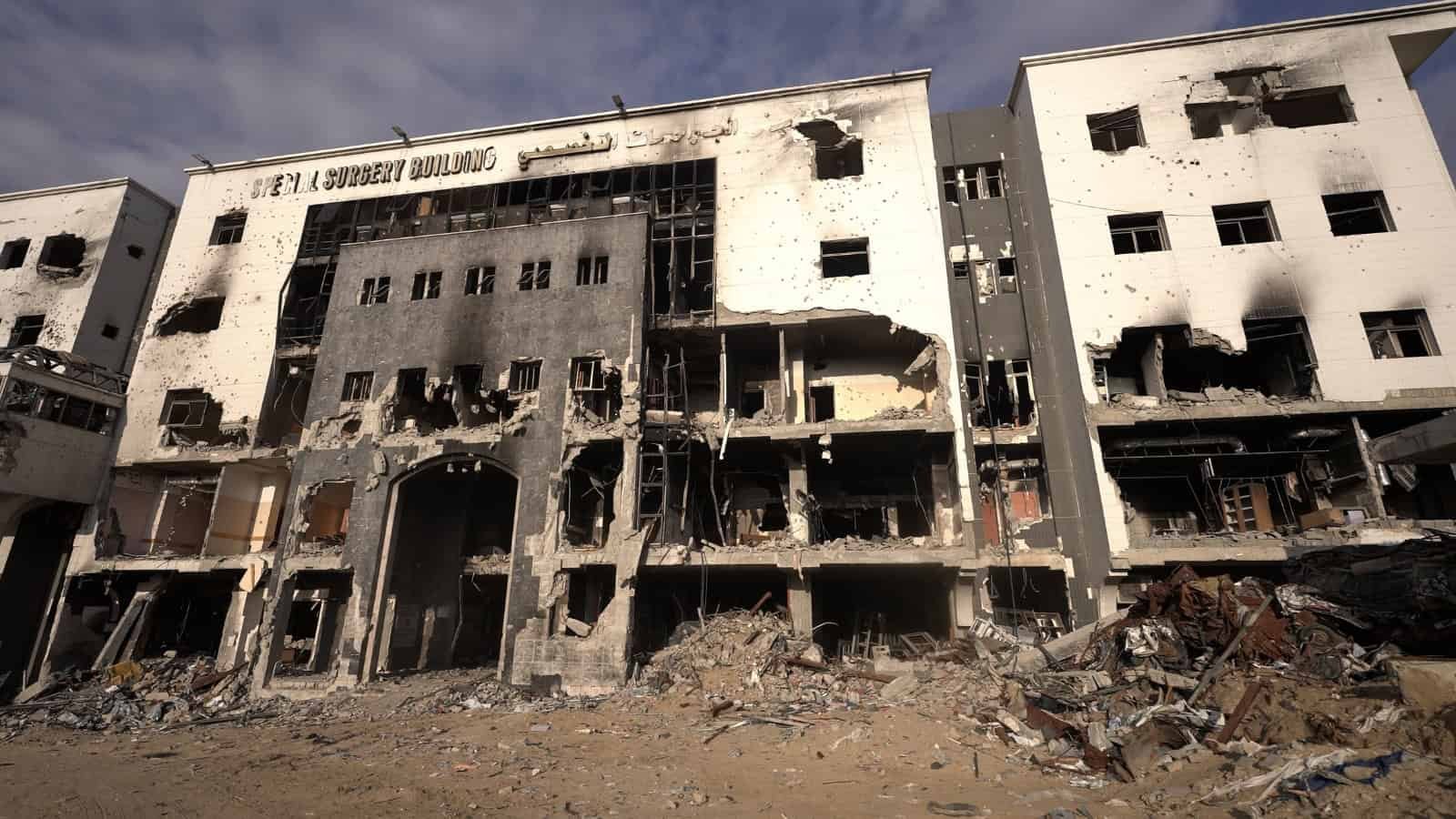
On the dialysis floor of Gaza City’s al-Shifa Hospital, the machines never stop. Patients sit in tight rows, tubes running from their bodies to the machines that keep them alive for a few hours at a time. Among them is 14-year-old Ruwaa Muntasir Abdul Karim from Jabalia, so small she stands out in the crowded room.
“My daughter used to walk and play before the illness,” her father, Muntasir, told Al Jazeera. “Every dialysis session keeps her alive. Any interruption causes her severe fatigue and shortness of breath,” he said.
Ruwaa’s weight has fallen from 65 kg to 35 kg and her weekly dialysis sessions have been cut from three to two. A kidney transplant, which is her only permanent hope, is ready, with her mother a matching donor. But the operation cannot be done in Gaza and the family’s request to travel abroad, which requires Israeli approval, has been pending for six months.
Half the dialysis machines have stopped
According to Gaza’s Palestinian Ministry of Health, half of all dialysis machines in the besieged territory have stopped working entirely, largely due to a shortage of sodium bicarbonate needed to run them. The number of hospitals able to treat kidney failure has dropped from seven to four, with at least one dialysis centre destroyed during the war.
The ministry says Gaza had about 1,200 kidney failure patients before the war. That number has since fallen to around 700, after more than 470 died from missed dialysis sessions and a lack of essential medicines, according to the Palestinian Centre for Human Rights.
At Al-Aqsa Hospital in central Gaza, one of the four still treating such patients, kidney department head Osama Abu Rahma told Al Jazeera said 25 of the facility’s 51 machines are out of service. Sessions have been shortened and reduced in number, even as complications mount due to breathlessness, heart and lung problems and dangerously high potassium levels. He said the lives of hundreds of patients are at direct risk.
Also Read
India shipped 2,596 arms to Israel, risks war crimes complicity
Thousands of amputees waiting for limbs
The shortages run across Gaza’s health system. The World Health Organization (WHO) estimates the war has left more than 43,000 people with “life-changing” injuries, including thousands of amputations. As of October 2025, the WHO put the number of amputees at between 5,000 and 6,000, with most still waiting for prosthetics.
In Khan Younis, physiotherapist Aya al-Shaltouni told Al Jazeera that prosthetics, wheelchairs and crutches are in desperately short supply. “Many patients wait for long periods and some do not receive anything,” she said. “We create treatment plans, but without proper assistive tools we cannot reach the desired results,” she added.
Zaki Jumaa Salem Abu Harb, a 60-year-old farmer from northern Gaza, lost a leg in an attack in March 2025 and recently received a prosthetic after months of waiting. “There are children who lost their limbs,” he told Al Jazeera. “Some of them don’t have devices to help them walk properly. You feel they’ve been deprived of the simplest rights in life.”
Mental health crisis in the tents
Beyond the physical wounds lies a deep psychological one. On the outskirts of al-Aqsa Hospital, 22-year-old Hadeel lives in a displacement tent, caring for seven siblings instead of sitting for university exams. She recounted the night a strike hit near their shelter and left her mother buried in rubble.
“My mother was under the rubble… only her fingers were visible,” she recalled to Al Jazeera. “The sound of my mother calling our names and her image never left me,” she said, now battles depression, sleeplessness and emotional exhaustion.
Asil Abu Shaweesh, a 27-year-old psychologist in central Gaza, said the mental health crisis is widespread after nearly three years of war, displacement and loss. She has seen depression, anxiety, post-traumatic stress and panic attacks among adults, and bedwetting, nightmares and aggression among children. “Everyone in these conditions needs psychological support… and this need will continue,” she told Al Jazeera.