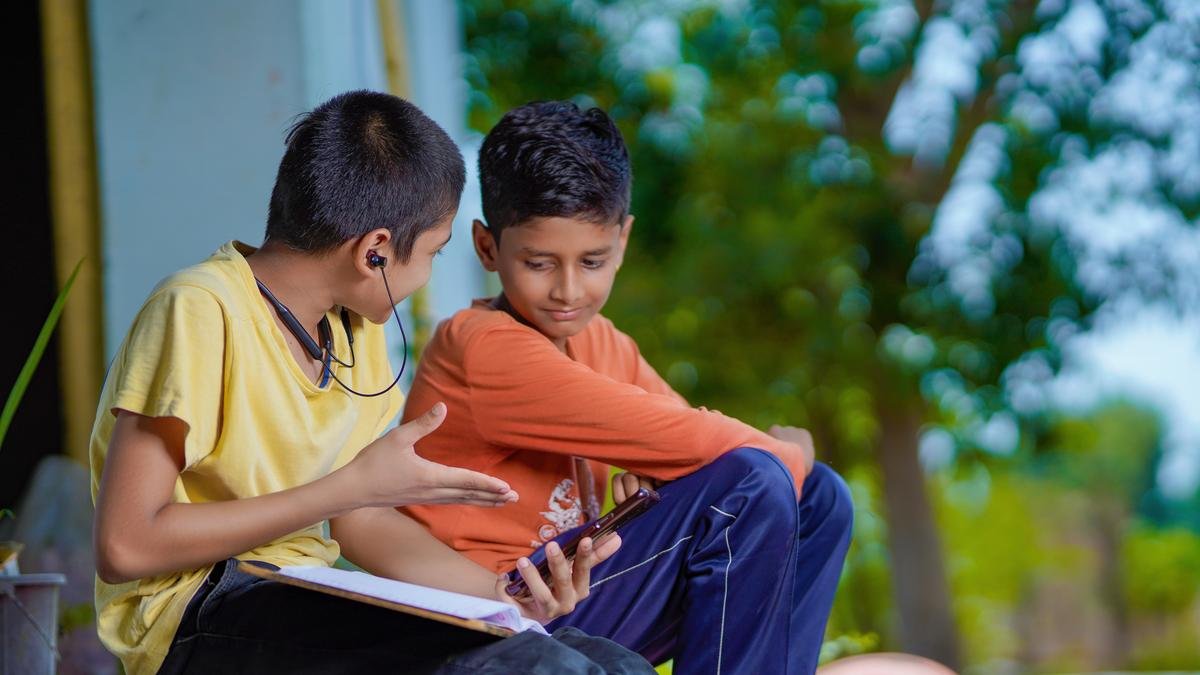
India’s diversity extends beyond basic linguistics, bringing in cultural, socio-economic, and regional markers. This country is home to over one crore tribal residents whose history goes back thousands of years and makes up almost 9% of the total Indian population. However, despite having a large population, Indian tribal communities have remained underserved and marginalised for a long period. Global technological advancements could help bridge the digital divide to ensure inclusive growth.
The term technological advancements is considerably broad if we look to apply it to bridging the digital divide in tribal India. At present, India and the rest of the world are placing tremendous emphasis on Artificial Intelligence (AI), Machine Learning (ML), Cloud, etc. This means that significant competition has already been involved in the space. However, one such discipline exists that is yet to receive simultaneous attention from the world — Robotics.
Experiencing the digital divide
Many tribal communities reside in regions that have historically not been developed due to several challenges. For instance, the remote areas of Jharkhand and Chhattisgarh have witnessed instability, and connectivity has borne the brunt of it. In the Seven Sister States or the northeastern part of the country, connectivity has once again been a challenge because of the terrain. However, modern digital technologies mean that these challenges can essentially be overcome, and the introduction of an interesting discipline such as Robotics that could be demonstrated first-hand can lead to significant developments.
The digital divide of the Indian tribal communities is not only because of connectivity challenges but also because they live on the margins in terms of economic progress, social development and technology access. Yet, the emergence of new technologies has impacted them as well, and may help to advance their living standards. While Robotics could be a complex discipline at first glance, its real-world applications and demonstrations align perfectly for motivating the youth, and first-hand demonstrations help to overcome the misconception of complexity.
Robotics can lend itself to the method of learning by doing. The devices are real things and working with them give a sense of satisfaction, rendering them attractive to young people, including tribal youth.
Scope of development
Though literacy rates among the ST population is relatively high, some 70%, the mother tongue would be the best mode of instruction for tribal communities, just like it is for any community. But conveying technology and technical terms in the native languages of Indian tribes has been a challenge.
With the advancements in AI, however, it is possible to create small language models (SLMs) that are equipped with regional languages or dialects. Using these digital mediums for pedagogy enables the diverse tribal communities to not only learn about different technological disciplines, including Robotics in their mother tongue, but also practice the same. These SLMs are equipped with data banks, or digital libraries that can be further used to create a long-term knowledge-gathering process.
By deploying this as part of the larger outreach process, the digital divide is not only bridged in an era-appropriate way but also boosts the the chances for tribal youth to join the community of highly trained tech professionals. As a result of this comprehensive effort, a long-term talent pipeline can be created between the tribal communities and the technology sector, developing the quality of life of the youth while also offering the industry stakeholders a steady supply of highly efficient professionals.
The advent of new-age technology, such as AI-driven classrooms, learning solutions, and others, means that these tools can be made available to the most marginalised too. However, it must be a public-private affair, and such is the case that is taking place via different State governments introducing similar courses in the K12 curricula in schools, and the private sector bolstering it with community outreach campaigns.
With the outreach process surrounding Robotics in the middle, long-term developments of the communities themselves can be made possible, and by tapping their untapped potential, India stands to gain massively going into the next decade.
(Born in a remote town in Madurai, Tamil Nadu, Arun Prakash is Founder and CEO of GUVI Geek Networks, an HCL Group Company and an IIT-Madras & IIM-Ahmedabad incubated EdTech platform that offers free and paid coding and management courses in Hindi, Telugu, Kannada, Swahili, Bengali, Tamil, and so on.)
Published – July 25, 2025 03:25 pm IST