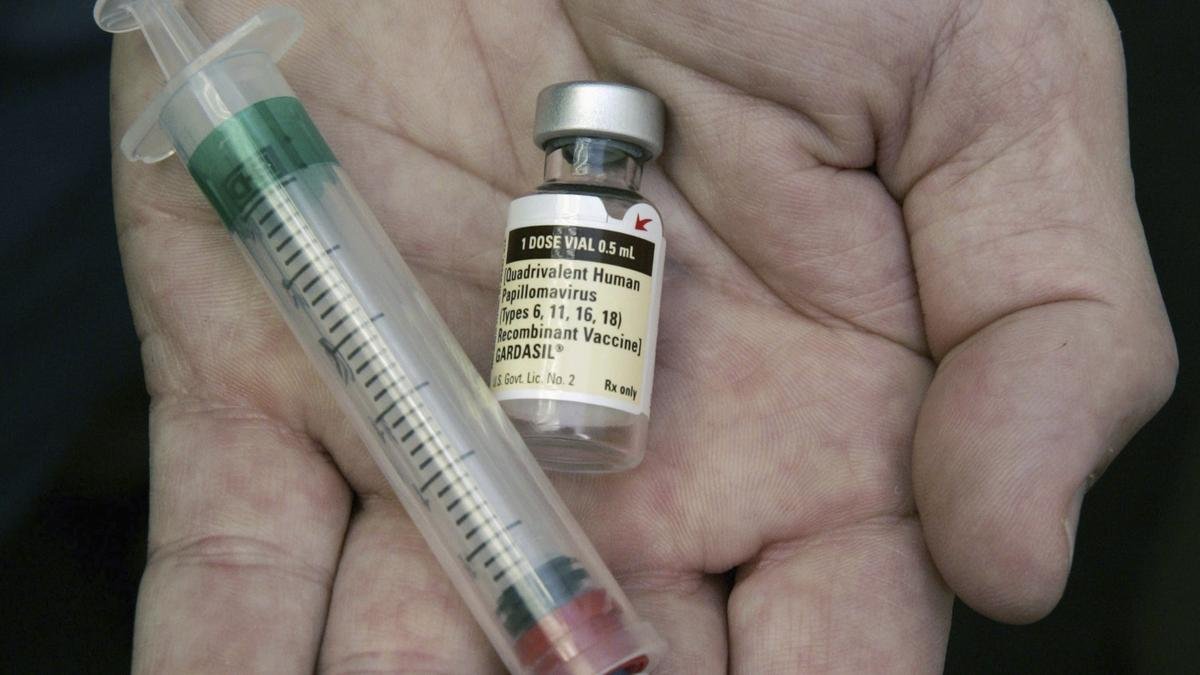
Represenatative image
| Photo Credit: AP
Kerala’s decision to introduce HPV vaccination targeting adolescent girls, to protect them from cervical cancer is generally hailed as a positive public health measure. However, health experts have pointed out that the State has other pressing public health concerns, where also vaccination strategies must be prioritised.
Going by the current data from the population-based and hospital-based cancer registries in Kerala, the incidence of cervical cancer has been on a steady decline in the State over the past several years and it no longer figures among the top five cancers affecting women in Kerala, according to epidemiologists. This is consistent with improvements in women’s health and hygiene, better sexual practices, education and healthcare access in Kerala.
Even though the World Health Organization (WHO) has recommended HPV vaccination for adolescent girls, in Kerala cervical cancer incidence is only eight per lakh population, even when at the national level, cervical cancer remained the second highest of all cancers reported amongst women as in 2022.
‘Only if there is an uptick’
The committee headed by Dr. B. Ekbal, which submitted the State’s Vaccine Policy recommendations in November 2022, had noted that HPV vaccination should be considered in Kerala only if there is an increasing trend in the incidence of cervical cancer from the current baseline.
It said that given the fact that the cost of vaccinating 13 lakh adolescent girls would be over ₹200 crore, HPV vaccination was not indicated, nor was it cost effective.
Dr. Ekbal says that this picture has changed given that Serum Institute of India is now producing HPV vaccines at much competitive rates. While HPV vaccine manufactured by pharma majors are available in the range of ₹2,000-₹4,000/dose (there is also the HPV vaccine which protects against nine strains of HPV, costing around ₹10,850/dose), Cervavac produced by Serum Institute of India is available at ₹2,000/dose.
“HPV vaccine cost has come down and as far as dosage is concerned, there is some emerging evidence, (as per the WHO), that even a single dose delivers solid protection against HPV. That changes the picture completely. From a gender perspective, I am happy about the State’s decision to protect adolescent girls against HPV,” Dr. Ekbal said.
Current public health concerns
However, the State should not forget its current public health concerns, which included protecting children from rabies through anti-rabies pre-exposure prophylaxis vaccine and from mumps, through an additional dose of MMR vaccine, he said. Rabies is emerging as a serious public health issue in the State, with children being a major casualty, he reminded.
“The mortality and morbidity due to influenza and pneumococcal infections is high in the elderly, the immunocompromised and those with co-morbidities. The State should prioritise annual flu vaccine and pneumococcal vaccine to protect elderly against pneumonia and meningitis,” Dr. Ekbal pointed out.
He said that the Health department should recommend these vaccines so that there is more uptake for the same, which can bring down the cost of vaccines.
Time to push for elimination
“Introducing HPV for adolescent girls is a policy decision that the Government had taken much earlier. Questions whether HPV vaccination is a priority now can be controversial. It is true that cervical cancer incidence is going down steadily and thus this would be the right time to push through elimination strategies. HPV vaccination is being introduced as part of the State’s efforts to eliminate cervical cancer and the operational details are being worked out,” PK Jameela, member, State Planning Board, said.
Published – July 29, 2025 07:49 pm IST