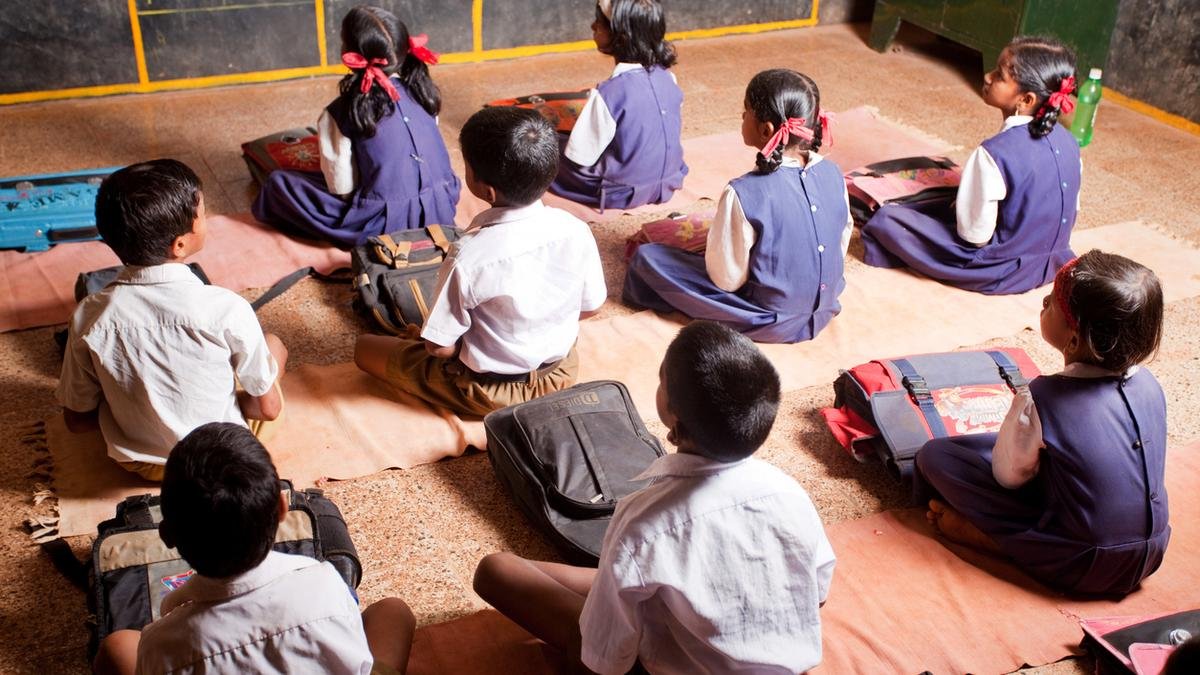
India’s education system is at a transformative crossroads. With the launch of the National Education Policy (NEP) 2020, the country has taken a step toward reimagining how our children learn, grow, and prepare for the future. At the heart of this reform is the introduction of a new academic structure: the 5+3+3+4 model, which replaces the traditional 10+2 format.
This model restructures the school journey based on a child’s developmental stages:
• Foundational Stage (Five years): Three years of preschool + Classes 1and 2 – with a focus on play-based and activity-based learning.
• Preparatory Stage (Three years): Classes 3 to 5 – building on foundational skills through discovery and interaction.
• Middle Stage (Three years): Classes 6 to 8 – introduction to subjects more formally and experientially.
• Secondary Stage (Four years): Classes 9–12 – critical thinking, multidisciplinary learning, and career exploration.
This model is built on the recognition that a child’s brain development is most rapid in the early years, and therefore, Early Childhood Care and Education (ECCE) must be formally integrated into the education system. The emphasis shifts from rote memorisation to experiential, multidisciplinary, inquiry-based learning, along with flexible subject choices and holistic assessment.
What’s lacking
While the vision is clear, the ground reality varies due to infrastructure gap, lack of teacher preparedness, lack of parental awareness and support, and more reasons.
Infrastructure gap persists
While many private urban schools have already begun adopting elements of NEP—play-based learning, soft-skill assessments—the majority of government and rural schools are still grappling with basic infrastructure gaps.
Many anganwadis still operate from single-room setups with no toilets or drinking water. Pre-primary classes are absent in most government schools despite being the starting point of the foundational stage. Lack of availability of teaching-learning materials remains a challenge.
Teacher preparedness
The success of NEP lies in the trained teachers, but this is also where readiness is most lacking. Many teachers are unfamiliar with activity-based learning or competency-based assessments. The B.Ed. programs are outdated, still aligned to the older 10+2 structure. Continuous professional development is lacking, especially in regional government schools. Teachers need more than just orientation—they need sustained mentoring and classroom-level handholding.
Changes in the curriculum and textbook
States are in different stages of rolling out NEP-aligned syllabi. Some, like Karnataka and Maharashtra, have begun introducing revised content for certain grades. But in many states, textbooks have not been updated in time. Some grades received no new textbooks till midway through the academic year. Teachers are left improvising with old material, creating inconsistencies in learning outcomes. This lack of standardisation undermines the NEP’s intent of equalising access to quality education.
Parental Awareness and Support
One of the most important barriers is lack of awareness among parents, especially in semi-urban and rural India. Parents often equate learning with rote outcomes and high marks. Explaining the value of play-based learning, project work, or portfolios takes time and engagement.
Encouraging signs of progress
Despite these hurdles, there are promising green shoots. The PM SHRI Schools initiative aims to upgrade over 14,000 government schools as “model NEP schools,” with modern infrastructure, experiential learning, and digital classrooms. Delhi, Maharashtra, and Odisha have piloted new foundational and preparatory curricula that align with NEP. Several teacher training apps and platforms, like NISHTHA and DIKSHA, are helping bridge knowledge gaps.
What needs to be done?
For the NEP and its 5+3+3+4 model to succeed, we must:
1. Strengthen foundational infrastructure – especially in anganwadis and primary schools.
2. Revamp teacher education – both pre-service and in-service.
3. Ensure timely rollout of updated curriculum and materials.
4. Engage parents and communities to build awareness and trust.
5. Monitor progress transparently and support schools in the transition.
A journey, not a destination
India’s education system is undergoing a shift—one that’s long overdue and filled with promise. But readiness isn’t uniform. While some schools are moving ahead with confidence, others are only just beginning the journey.
What’s clear is that this change cannot be implemented in isolation. It needs collective effort from policymakers, educators, parents, and students alike. The 5+3+3+4 model is more than a new structure. It’s a call to rethink how we teach, what we value in learning, and how we prepare children for life—not just exams. And with the right support, training, and mindset, Indian schools can not only be ready—but become global examples of educational transformation.
(Praneet Mungali is the trustee and educationist at Sanskriti Group of Schools.)
Published – August 08, 2025 09:15 pm IST