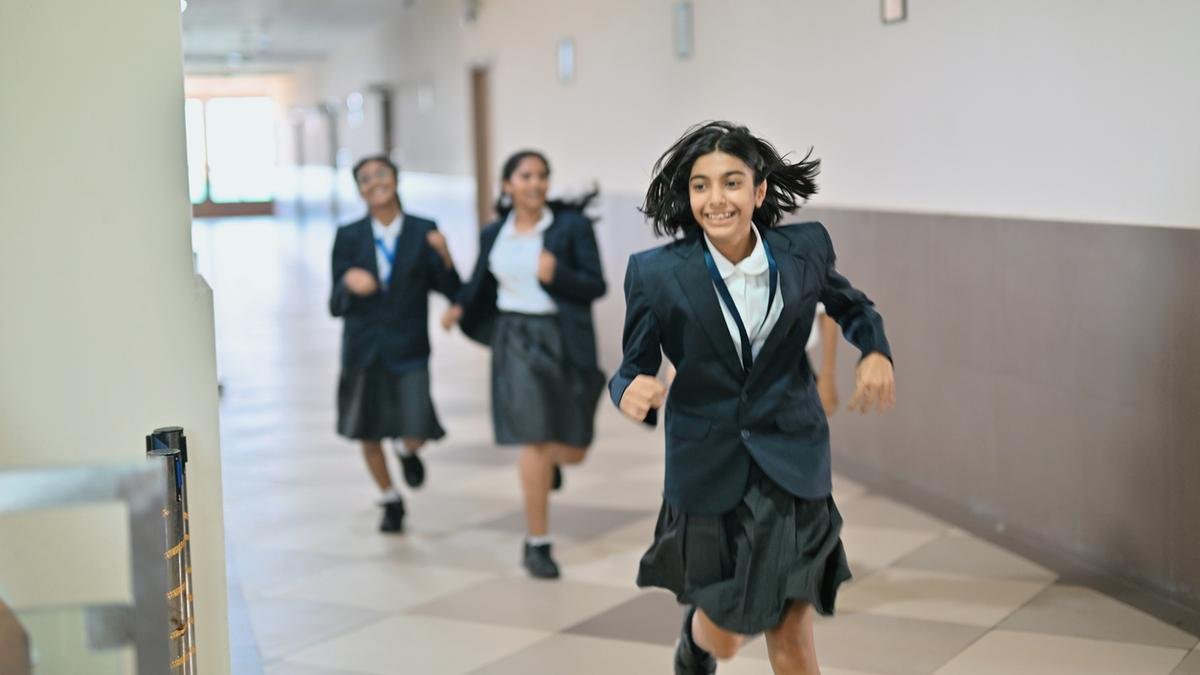
A few weeks ago, the news that the Andhra Pradesh government had introduced a ‘No School Bag Day’ on Saturdays sparked many discussions among educators and parents. Even In my own school, we have occasionally observed no-bag days, usually on Children’s Day and field trip days. These days are meant to be joyful and they often come with their own challenges.
Planning a day without textbooks is not as simple as it sounds. Teachers must design engaging activities, seek approvals from heads of departments, and finally align with the principal’s expectations before plans reach students. Ironically, what is meant to be a lighter day can leave teachers mentally and physically exhausted even if it happens just once a year. So when this reform was announced, it made me pause and ask: How will this work every Saturday? And why has it been implemented now?
As a primary teacher, this news prompted me to discuss it with my colleagues, many of whom are deeply concerned about academic outcomes and classroom discipline. Our conversations were filled with both excitement and anxiety. While opinions varied, a few common reflections emerged, which I share here.
Beyond cognitive goals
The National Education Policy (NEP) 2020 clearly states that child development is not limited to cognitive and physical growth alone. Emotional and metacognitive development are equally important. However, in our daily school routines, most of our time is spent addressing cognitive goals like completing syllabus, assessing learning outcomes, and preparing children for evaluations.
Indian educational philosophy
It is also worth remembering that our present schooling structure itself did not originate from Indian educational philosophy. The modern classroom-based, textbook-driven system was introduced during the colonial period under Lord Macaulay. While it brought uniformity, it also sidelined many indigenous ways of learning that were deeply skill-based and experiential. For nearly two centuries, India has attempted to correct these gaps through multiple education commissions, eventually definitive in the National Education Policy 2020.
In contrast, the traditional Gurukula system emphasised learning through observation, practice, and mentorship rather than books and examinations alone. Skills such as archery, horse riding, agriculture, and ethical decision-making were not treated as “extra-curricular” but as integral to education and nation-building. Ironically, many of these activities today are labelled as co-curricular or hobby-based, even though they have deep roots in Indian knowledge systems.
Address what gets sidelined
For today’s Generation Alpha learners, parents and schools must recognise that academic achievement alone is no longer sufficient. Social skills, adaptability, collaboration, and real-world awareness will determine how well children navigate an increasingly complex world.
‘No Bag Day’ offers an opportunity to address what often gets sidelined. Saturdays can be used to foster emotional intelligence, reflection, collaboration, and self-awareness. When teachers shift roles from instructors to facilitators, learning becomes more experiential. Activities such as art-integrated learning, storytelling, group discussions, and role play can help children process ideas in meaningful ways.
One powerful idea we discussed was using these days for community-based learning. For primary children, visiting and interacting with community helpers like vegetable vendors, shopkeepers, sanitation workers, gas delivery staff, or supermarket employees which can be a profound eye-opener. Children often grow up hearing about only a few “successful” professions such as doctors, engineers, or civil servants. Exposure to everyday workers helps them understand that society functions because of many interconnected roles.
Such experiences can instil respect for all occupations and reinforce an important value: no job is inferior; only a lack of dignity towards work is. These lessons, learned early, stay with children far longer than textbook definitions.
Learning social responsibility
For middle and secondary school students, No Bag Day can take learning beyond the classroom walls. Activities such as tutoring government school children, cleaning local water bodies, participating in green school initiatives, helping senior citizens, or planting trees can help students connect education with responsibility.
These experiences teach an essential truth that education is not only a pathway to employment, but a tool to become responsible, socially aware citizens. When students see the impact of their actions, learning gain’s purpose.
While these ideas sound inspiring, their success depends entirely on thoughtful implementation. No Bag Day should not become an unstructured or token activity. Teachers need to plan with the same care that they apply to academic lessons such as identifying emotional, social, and metacognitive skills to be developed and ensuring inclusivity for every child.
Support from school leadership, clarity of objectives, and parental understanding will determine whether this reform becomes meaningful or merely symbolic.
When school bags come off, learning should not disappear. Instead, it should take a different form which nurtures empathy, reflection, and connection. Done well, No Bag Day has the potential to remind us that education is not just about what children carry on their backs, but about what they carry within.
(Sign up for THEdge, The Hindu’s weekly education newsletter.)
Published – January 19, 2026 05:47 pm IST