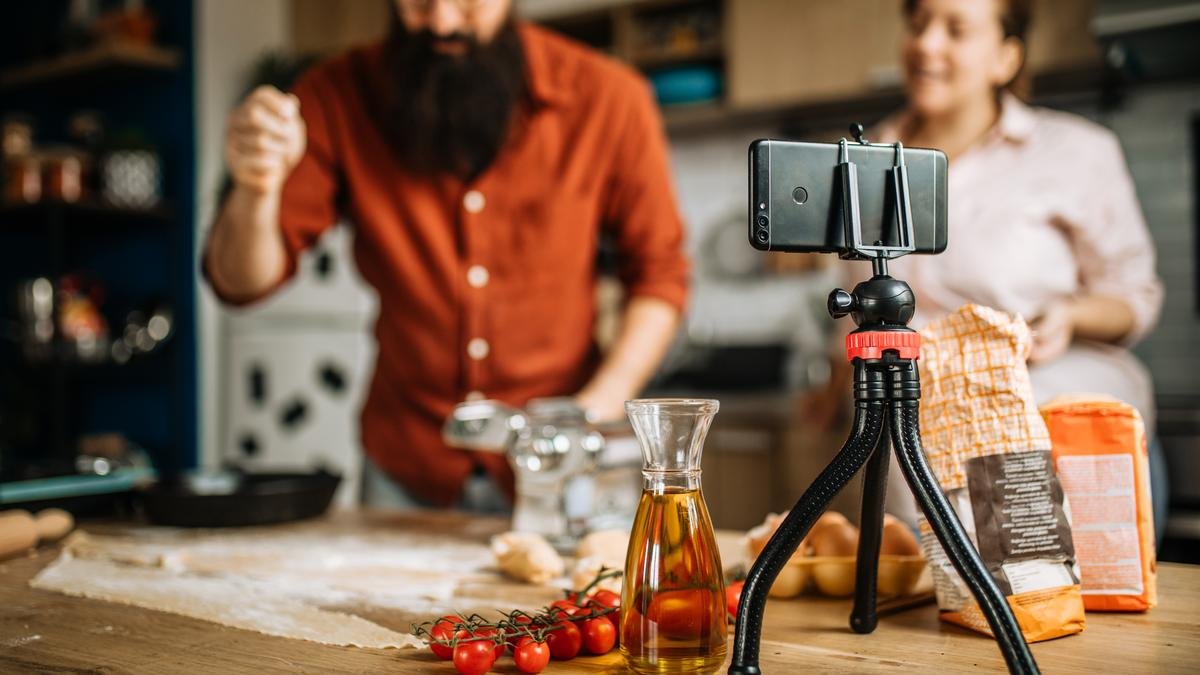
The average person now spends well over two hours a day on social media. A staggering statistic, and millions of those hours are spent watching complete strangers cooking in their home kitchens. Now logic would suggest these are people looking for inspiration or to learn a new skill, but fascinatingly, most people watching recipes never cook them, or cook at all, for that matter.
I know this because I spend a fair amount of my life making recipe videos and interacting with the people who watch them. I have friends who barely venture beyond popping a toast, but tell me they follow my recipe videos religiously. Admitting that they get a sense of joy watching the process alone and never attempt or intend to make the dishes.
My wife is no different. We have almost no carpets in our house, yet she can happily spend 20 minutes watching videos of people deep-cleaning carpets. Meanwhile, I can lose a similar amount of time watching somebody in Chennai making dosas despite spending much of my professional life around them in my restaurant kitchens. Perhaps we are all just fascinated by people who are very good at something.
This probably explains the rise of ASMR in videos, another Instagram fetish, where mundane sounds are clearly captured or even exaggerated in videos! The crackle of mustard seeds hitting hot oil, the sound of a flame coming on or the squelch of dough being rolled out. The stats show videos with these sounds do a lot better than those without.
So what is it about this food voyeurism? Clearly it helps me and my account, but I have often wondered why it has become such a powerful part of modern life. Are we changing as a society, or is this simply a very old human instinct that has found a new outlet?
When people describe why they enjoy food content, the words that come up most often are relaxing and comforting. In a world where so much of the news and social media seems designed to provoke outrage, anxiety, envy and division, there is something reassuring about watching somebody patiently chop an onion, stir a pot or knead a ball of dough. Cooking follows a simple and satisfying narrative. Raw ingredients become something delicious. Hunger is solved. There is a beginning, a middle and an end. It’s simple and universally appealing.
I also wonder whether these videos satisfy a sense of curiosity and adventure. Travel has become more expensive and many of us spend more time dreaming about destinations than actually visiting them. Watching somebody cook street food in Bangkok, stretch noodles in Beijing or steam idlis in Bengaluru offers a glimpse into another culture. You may never make or taste the dish yourself, but for a few moments you are transported somewhere else.
The hopeful side of me likes to think these videos also play a genuinely educational and unifying role. At least that is certainly my motivation when I write recipes, make videos or work on books. I want to reconnect people with their pasts, give expat Indians a sense of nostalgia, and offer those who have never visited my homeland an introduction to my culture through its food. Hopefully in a way that feels calm, accessible and unintimidating. If that eventually inspires someone to book a ticket and experience the country for themselves, my mission is accomplished.
In a fractured world increasingly shaped by misinformation, culture wars and algorithms designed to keep us angry, food remains one of the simplest ways to understand one another. It is difficult to fear a culture once you have sat at its table, shared a meal and realised that the people are often far more alike than the politics would have you believe.
All this food porn has had an interesting effect on restaurants too. Diners today are far more informed and adventurous than they were a decade ago. An authenticity check is often only one YouTube video away. People have watched enough grandmothers, street vendors and home cooks online to develop a sense of what feels genuine and what feels manufactured, even if they have never tasted the original dish themselves.
They are willing to travel across a city for a specific dosa, biryani, or a bowl of noodles rather than settling for whatever version happens to be nearby
| Photo Credit:
Getty Images/istock photos
Instagram effect
The most influential critics today are often not newspaper reviewers but ordinary diners sharing their experiences online. Trends spread faster. Regional dishes become mainstream almost overnight. Restaurants are challenged to be more honest about what they serve because audiences have become surprisingly good at spotting when something is just a marketing campaign.
A more subtle knock-on effect is that even the guests who haven’t spent days researching a dish or restaurant doom scrolling social media are more curious about regional food. They are willing to travel across a city for a specific dosa, biryani, or a bowl of noodles rather than settling for whatever version happens to be nearby. In many ways, social media has created more aware diners and pushed restaurateurs to get more confident.
At its heart, though, I suspect the appeal of watching people cook is much simpler than any of these explanations.
Food remains one of the most universal forms of human connection. Long before restaurants, cookbooks, or social media existed, people gathered around fires to prepare meals together. Watching someone cook meant more than learning how dinner was made. It was how stories were passed on, conversations unfolded, and people found their place around the table.
The technology might have changed dramatically but the instinct remains the same. Today we gather around screens rather than stoves and watch people we will never meet prepare dishes we will probably never cook. Yet I suspect somehow it satisfies the same curiosity and creates the same sense of connection. In an online world that often feels designed to divide us, there is something heartwarming about millions of people quietly spending part of their day watching somebody make dinner.
Karan Gokani is a London-based chef and restaurateur who spends his time cooking, travelling and exploring what the world is eating. He loves the gym, biriyani and his frying pan. Not necessarily in that order.
Published – June 12, 2026 05:08 pm IST