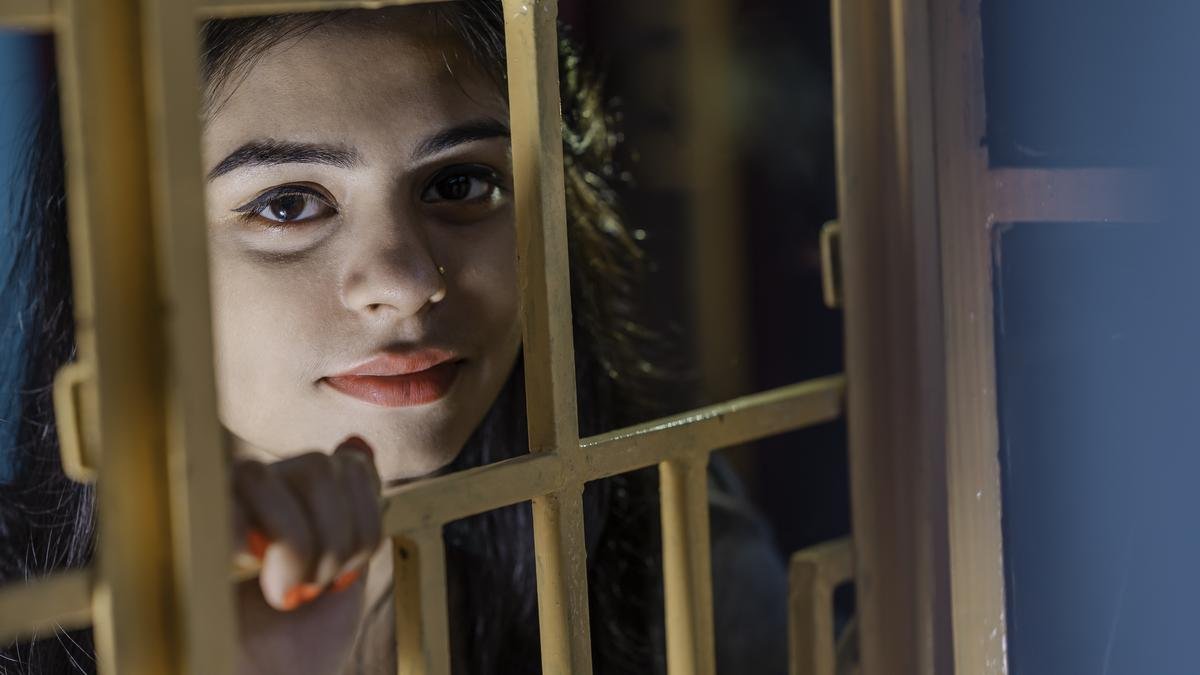
A girls student’s hostel in Mumbai—run by Maharashtra’s higher and technical education department—has installed biometric systems and sends real-time alerts to parents every time a girl enters or exits the premises. These measures are exclusive to the girl’s hostel as the boy’s hostel, located just a few kilometres away and run by the same government department, has no such digital policing.
In the heart of Metropolitan Mumbai at Churchgate, Telang Memorial hostel has been imposing this rule for the past three months now. This is in addition to a few other gender-based rules such as a dress code even within the hostel and strict curfew timings. Gungun (name changed), a 21-year-old resident of the hostel, says the rules directly affect her career and strains the relationship with her parents. “As part of my curriculum, I am doing an internship with a reputed firm, which expects me to stay late. But I cannot do so, thanks to the ridiculous rules,” Gungun said. “Other interns in the office pitch in to stay late and they have better chances in getting a placement or getting a reference from the seniors,” she added.
“These alerts make my mother extremely anxious. When I am confident of keeping myself safe, why loop my mother into it?” she questioned. Is this done as a safety measure? No, Gungun said, as she added, “It is more of a surveillance than safety. This is one of the safe neighbourhoods with people walking even after mid-night.”
Of curfews and moral policing
Telang Memorial hostel, affiliated with government colleges, is primarily reserved for students admitted through state reservation quotas, including Scheduled Caste, Scheduled Tribe and Other Backward Classes categories. These hostels provide accommodation and food at a subsidized price – at less than ₹2,500 a month and is a go-to option for students studying in government colleges.
Providing the long list of gender-based rules, Gungun said, “We cannot wear skirts and shorts even within the hostel premises as knee-level clothes are the threshold. If we wear, we are advised and even shamed. Even though the curfew is at 9 p.m., we are not allowed to step out after 8 p.m.” The hostel doesn’t allow food deliveries beyond 10 p.m., and the mess shuts at the same time. With even basic electronic items like kettles being prohibited, a student without snacks on hand has no choice but to sleep hungry. “If you don’t have a relative in the city, you cannot take a night out. Many girls haven’t had the chance to explore the city due to the curfew,” she said.
In the same neighbourhood, Kunal (name changed) has been staying at the Mathoshi boys hostel for the past 2.5 years. Though maintained by the higher education department, the hostel lacks basic hygiene and has maintenance issues, he says. “There is a biometric system but it is not functional. The curfew time is only at 11 p.m. but is not strictly imposed,” Kunal said.
The Hindu spoke to two other students from both these hostels who confirmed the narrative. Following several safety-related incidents in hostels, the Maharashtra Higher and Technical Education Department issued a 2023 directive mandating improved security measures. These included appointing female security guards, installing CCTV cameras and maintaining digital entry logs in women’s hostels. The Hindu tried to reach out to the officials from the department to question if the guidelines specified sending real-time alerts to parents, but there has been no response.
Student testimonials on Reddit campuses mention that female students were monitored by biometric systems that triggered SMS alerts to parents when they left or entered hostel premises. “A message is sent to our parents with in and out timings. Food stalls, basic amenities are all outside campus but nearby. Every girl goes outside at least once or twice, but the biometric system means their parents are tracking their every move and possibly restricting them to leave,” a reddit user wrote, adding that no such rules existed in boys hostels, even though there have been cases of rampant drug usage among the boys.
Tracked by technology
Gender-based restrictions in Indian hostels are nothing new—and they aren’t limited to government-run facilities. Private, university and government hostels alike are enforcing such rules. In fact, some private hostels are even flaunting biometric surveillance as a selling point.
In Jaipur, which is fast emerging as an educational hub with institutions like Rajasthan University, Haridev Joshi University and over 20 private colleges, hostels and PGs now feature biometric entry systems, CCTV surveillance, and real-time tracking dashboards accessible to parents. “Parents prefer PGs with biometric systems for their daughters. Safety is their top concern,” said Parikshit Singh, who runs a PG in the city.
From locking the gates of girls’ hostels during Holi to calling parents when they travel home, the rules are many. Abdul Vahab, Students’ Federation of India secretary, Uttar Pradesh and a former student of Babasaheb Bhimrao Ambedkar Central University, Lucknow, recalled how the university imposed no curfew on boys, but barred girls from stepping out after 8 p.m. “This meant they couldn’t access the reading rooms that stayed open 24×7,” he said.
While boys were allowed to stay back in hostels during holidays, the same privilege wasn’t extended to girls. “Every time a girl left for home, her father would get a video call from the warden. When a woman is old enough to vote, why is she not trusted with the freedom to move?”
Gender-based curfews
Gender-based restrictions in Chennai’s SC/ST hostels go well beyond limited spaces for girls. Women’s hostels are fewer in number and more about control than care, said Dalit rights activist Shalin Maria Lawrence. Girls face daily humiliation—being slut-shamed for coming back late, whispered moral policing in front of others, and overt surveillance—even though basic necessities like clean toilets or safe food are often missing. These hostels justify protection, but deliver confinement, Ms Lawrence added.
Lara Jesani, a lawyer practising at the Bombay High Court, called out the curfew as not just discriminatory but a direct attack on women’s autonomy and freedom of choice. “Curfews are common in many private women’s hostels across the city. The Pinjra Tod movement was literally about breaking hostel locks—because such rules are preposterous,” she said. Calling tech-based surveillance a “technological curfew,” Ms. Jesani added, “Tracking entry and exit and sharing it with parents is taking it too far. It’s a complete restriction on personal liberty; it treats women as possessions and not citizens with equal rights.”
Published – July 18, 2025 11:24 pm IST