If you want to understand where Indian luxury fashion is headed, don’t look at a bridal lehenga. Look at a banana stem.
Specifically, look at the thick, fibrous stalks left behind in Indian farms after the fruit is harvested-millions of tonnes of agricultural residue that are usually dumped or are set on fire. Now, picture that same rough farm waste pulped, spun into whisper-soft yarn, and hand-embroidered with a delicate Lucknowi Chikankari.
Indian couture is in the middle of a plot twist. For decades, our idea of “high fashion” ran on a predictable formula: heavy Banarasi silk, yards of tulle, blinding sequins, and zardozi so dense you needed help sitting down. Lately, though, the country’s sharpest designers have started treating traditional luxury fabrics like old news. Instead, they are raiding junkyards, crop fields, and factory scrap bins, turning banana peels into supple “leather,” wedding scrap metal into red-carpet bodices, and weaving wild grass and discarded film negatives into coture, turning it into a sustainable fashion coture.
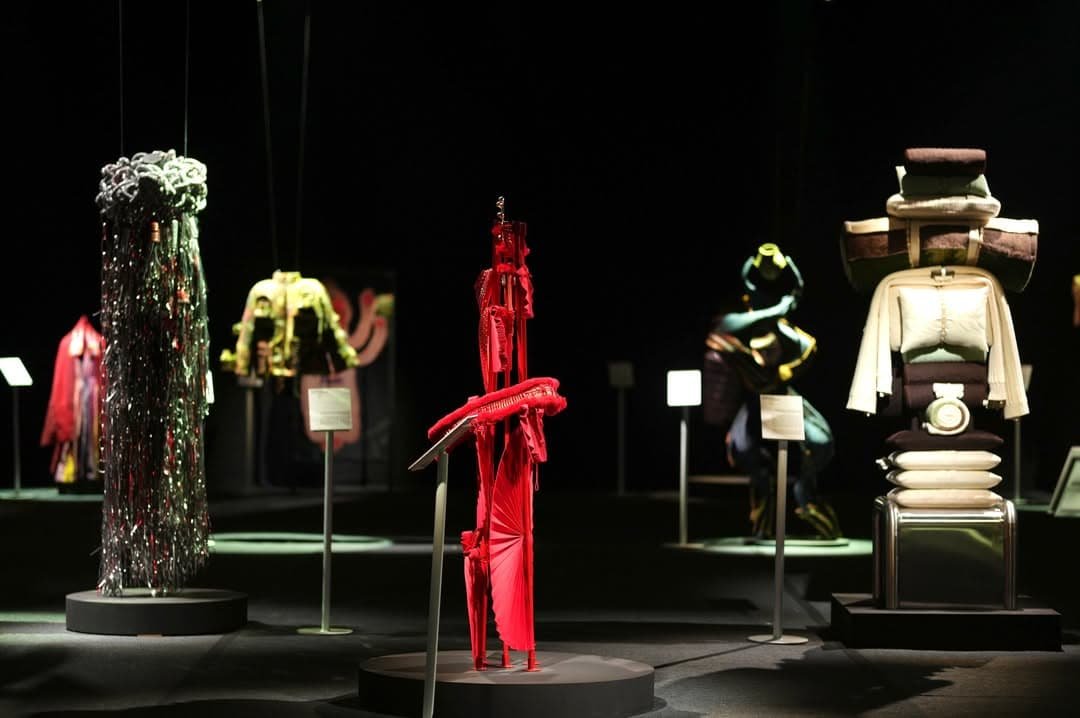
Inside Vogue’s “Material Matters” showcase
If you still think eco-friendly means beige linen sacks, Vouge India’s Forces of Fashion 2026 is here to prove you wrong. After drawing packed crowds at Mumbai’s Snowball Studios last week, the showcase opens at New Delhi’s DLF Emporio from November 29 to December 2 under a theme that sums up the industry’s new obsession: Material Matters.
Curated with more than 25 of India’s most influential design houses-including Manish Malhotra, Gaurav Gupta, Rahul Mishra, Anita Dongre, Amit Aggarwal, and Hyderabad’s own Aisha Rao- the showcase intentionally skips seasonal bridal trends altogether. Instead, it acts like a live textile laboratory, stripping couture down to its raw building blocks. Visitors aren’t just looking at finished silhouettes; they are weeing banana leather supple enough to rival calfskin, bio-resham spun without harming silkworms, handwoven hemp, cane, scrap metal, and discarded photographic film negatives re-engineered into high-fashion surfaces. Today, the real flex in couture isn’t surface bling-its proveenance.
The designers are rewriting the fabric rulebook
Walk through India’s most exciting design studios right now, and you will find creators treating overlooked waste like gold dust:
Crop waste goes couture: Punjab-born designer Tamanna Mullen, founder of Arth Atelier, has built a cult following by turning banana stem fiber into a breathable, cruelty-free textile with the natural lustre of raw silk. In Odisha, Richa Maheshwari’s label, BOITO, weaves wild sabai grass directly into handloom textiles, creating sculptural pieces that hold their own shape without synthetic stiffeners.
Junkyard glamour: Couturiers like Amit Aggarwal and Gaurav Gupta have long treated garments like wearable architecture, sculpting discarded industrial polymers, metallic wires, and scrap metal into liquid-like gowns. Meanwhile, textile artist Ashdeen Lilaowala has taken everyday plastic zip ties and looped them by hand into intricate, three-dimensional couture forms.
The art of leftover: Closer to home in Hyderabad, Aisha Rao has turned zero-waste upcycling into a bridal signature piece, putting tiny leftover offcuts of silk, brocade, and tulle into vibrant, painterly appliqué lehengas that look more like folk-art tapestries than conventional wedding wear.
From the runway lab to your wardrobe
For anyone wondering whether crop-waste couture feels scratchy or overly experimental, the surprise is in the drape. Banana-stem textiles carry a quiet, raw-linen luminosity that catches natural light without the harsh glare of synthetics, while sculpted metal polymers move like liquid mercy on red carpets-a look already championed by stylists dressing everyone from Bollywood’s front row to the global festival stage.
Even if you aren’t shopping for Rs 2-lakh couture, that mindset is quietly trickling down to everyday Indian style. It’s visible in the shift away from loud, mass-produced prints towards tactile, unlined weaves and in a growing appetite for customer upcycling, where young buyers are raiding family trunks to turn vintage sari borders into structured corsets, cropped jackets, and evening clutches.
Why this shift hits close to home
What makes this wave so gripping is how naturally it fits into South Asian style DNA. For years, modern retail sold us the idea that louder embellishment meant higher status-slowly pullinh us away from the tactile intelligence of our own looms.
Yet long before “circular fashion” became a front-row buzzword in Paris or Milan, Indian households were already masters of zero-waste dressing. We turned worn-out saris into Kantha quilts and prized hand-spun khadi and never threw away a usable scrap of cloth.
By pairing that ancestral instinct with modern biomaterials, turning banana groves into silk alternatives, and scrap metal into runaway drama, India’s designers aren’t abandoning fashion’s fantasy. They are reinventing it. The next time you stop scrolling to admire a striking silhouette on a fashion week feed, zoom in on the texture. The most coveted piece of couture in the room might just have started its life in a farm field, a tailor’s scrap bin, or a junkyard-reborn, against all odds, into wearable art.
And perhaps that is the real charm of this moment: Indian fashion isn’t erasing its love for heritage opulence-it is expanding the table. Gold zardozi and heirloom silks will always have their place, yet a discarded banana stalk or a forgotten scrap of borcade can now share the same spotlight, celebrated not for its price tag, but for the ingenuity behind it. For a new generation of dressers who care just as much about a garment’s backstory as its silhouette, that shift feels less like a passing runaway experiment and more like the start of a smarter wardrobe.